
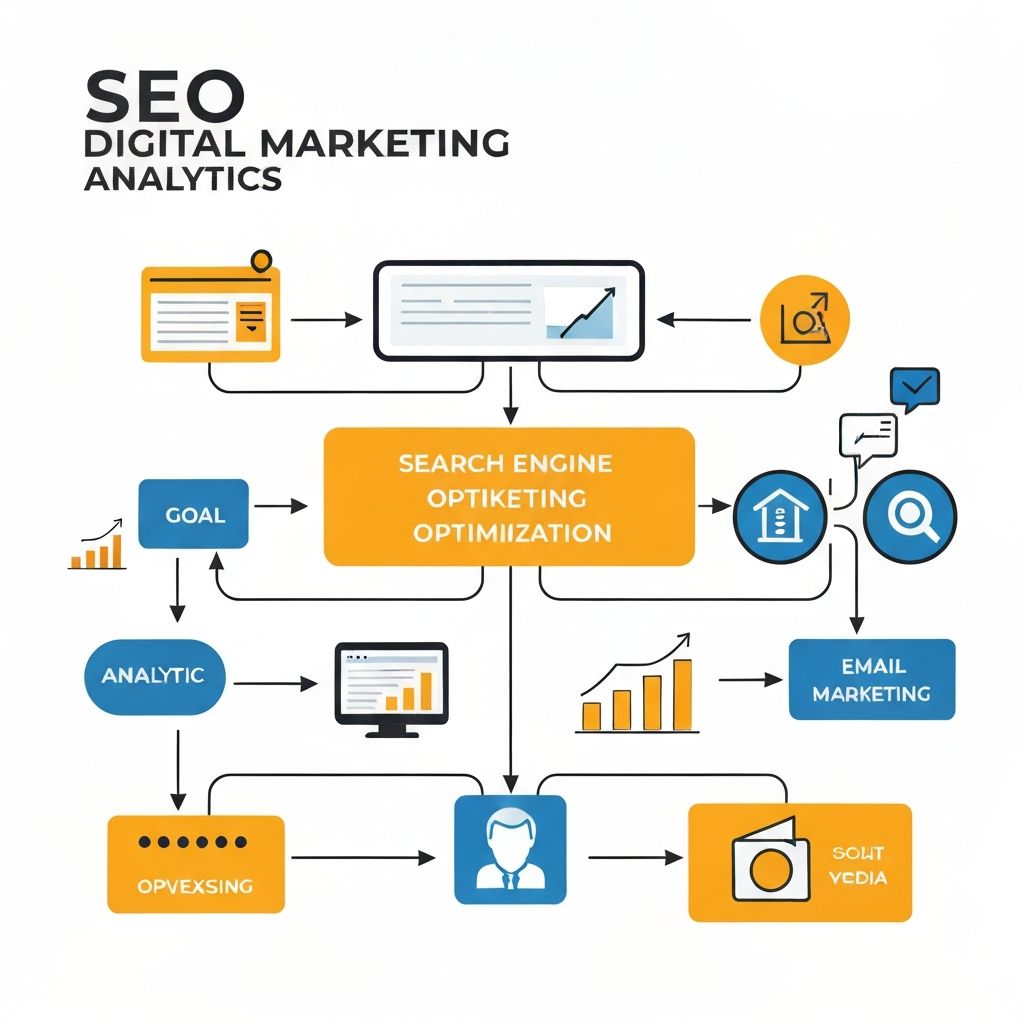
Search Engine Optimization continues to evolve rapidly. What worked yesterday might not work today, and what works today might be obsolete tomorrow. However, some fundamental strategies remain effective while adapting to new search engine algorithms, user behaviors, and technological advancements. Let's explore the SEO strategies that actually deliver results in 2024.
Understanding Modern SEO
Modern SEO extends far beyond keywords and backlinks. Search engines, particularly Google, use sophisticated AI and machine learning algorithms to understand user intent, content quality, and user experience. The focus has shifted from gaming the system to genuinely serving users.
Core Web Vitals, E-E-A-T (Experience, Expertise, Authoritativeness, Trustworthiness), mobile-first indexing, and AI-generated content detection are now integral parts of SEO. Success requires a holistic approach combining technical excellence, quality content, user experience, and strategic promotion.
Technical SEO Fundamentals
1. Core Web Vitals Optimization
Google's Core Web Vitals measure user experience through three key metrics that directly impact rankings:
- Largest Contentful Paint (LCP): Measures loading performance. Aim for LCP under 2.5 seconds by optimizing images, removing render-blocking resources, and using CDNs.
- First Input Delay (FID): Measures interactivity. Keep FID under 100ms by minimizing JavaScript execution and breaking up long tasks.
- Cumulative Layout Shift (CLS): Measures visual stability. Target CLS under 0.1 by specifying image dimensions and avoiding inserting content above existing content.
2. Mobile-First Optimization
With Google's mobile-first indexing, your mobile site determines your rankings. Ensure your mobile site offers the same content and functionality as desktop, with fast loading times and thumb-friendly navigation.
Use responsive design, optimize images for mobile networks, minimize pop-ups, and ensure buttons and links are easily tappable. Test on real devices, not just emulators.
3. Technical Infrastructure
- HTTPS: Secure websites are a ranking factor. Migrate to HTTPS if you haven't already.
- XML Sitemap: Keep sitemaps updated and submit them to search engines for better crawling.
- Robots.txt: Properly configure to control search engine access without blocking important content.
- Structured Data: Implement schema markup to help search engines understand your content and enable rich snippets.
- Canonical Tags: Prevent duplicate content issues with proper canonical implementation.
Content Strategy for 2024
1. User Intent Optimization
Modern SEO focuses on satisfying user intent rather than just matching keywords. Understand the four types of search intent:
- Informational: Users seeking knowledge (how-to, what is, guides)
- Navigational: Users looking for specific websites or pages
- Transactional: Users ready to purchase or take action
- Commercial Investigation: Users researching before purchase decisions
Analyze search results for your target keywords to understand what content format and depth Google considers relevant for that query.
2. Comprehensive Content Coverage
Create comprehensive, in-depth content that thoroughly covers topics. Google favors authoritative, detailed content over thin pages. Aim for:
- Comprehensive topic coverage addressing all related questions
- Clear structure with proper headings (H1, H2, H3)
- Visual elements (images, videos, infographics) to enhance understanding
- Internal linking to related content on your site
- Regular updates to keep content fresh and accurate
3. E-E-A-T Optimization
Demonstrate Experience, Expertise, Authoritativeness, and Trustworthiness:
- Experience: Show first-hand experience with topics you cover
- Expertise: Highlight credentials, qualifications, and subject matter expertise
- Authoritativeness: Build authority through quality backlinks and mentions
- Trustworthiness: Ensure accurate information, proper citations, and transparent business practices
4. AI and Human-Created Content Balance
While AI writing tools can assist content creation, Google can detect purely AI-generated content. Focus on creating genuinely helpful, human-centered content whether created by humans, AI, or a combination.
If using AI for content creation, always add human expertise, fact-checking, personal insights, and editing to ensure quality and originality.
Keyword Research and Optimization
1. Long-Tail Keywords
Focus on long-tail keywords (3+ words) that indicate specific intent. These often have lower competition and higher conversion rates than broad keywords.
2. Semantic SEO
Google understands relationships between concepts. Use related terms, synonyms, and contextually relevant vocabulary throughout your content naturally. Tools like LSI Graph and Answer the Public can help identify semantic keywords.
3. Featured Snippet Optimization
Structure content to win featured snippets by:
- Answering questions clearly and concisely
- Using bullet points and numbered lists
- Creating FAQ sections
- Defining terms in clear, dictionary-style formats
- Using tables for comparison data
Link Building Strategies
1. Quality Over Quantity
Focus on earning high-quality backlinks from authoritative, relevant websites rather than pursuing large volumes of low-quality links. A few links from respected industry sites outvalue hundreds of low-quality directory links.
2. Content-Driven Link Acquisition
- Create Link-Worthy Content: Original research, comprehensive guides, infographics, and tools naturally attract links
- Guest Posting: Contribute valuable content to respected industry publications
- Digital PR: Create newsworthy content and pitch to journalists and bloggers
- Broken Link Building: Find broken links on relevant sites and suggest your content as replacement
- Resource Page Links: Get listed on curated resource pages in your industry
3. Internal Linking
Build a strong internal linking structure to help search engines understand your site architecture and distribute page authority. Use descriptive anchor text and link to relevant related content.
Local SEO Strategies
For businesses serving local markets, local SEO is crucial:
- Google Business Profile: Claim, verify, and optimize your listing with accurate information, photos, and regular updates
- Local Citations: Ensure consistent NAP (Name, Address, Phone) across all directories and platforms
- Local Content: Create content targeting local keywords and addressing local audience needs
- Reviews: Actively encourage and respond to customer reviews
- Local Backlinks: Build relationships with local businesses, organizations, and news outlets
Video and Visual Content SEO
Video content increasingly appears in search results. Optimize videos by:
- Hosting videos on YouTube and embedding on your site
- Creating detailed video titles and descriptions with target keywords
- Adding transcripts and closed captions
- Using video schema markup
- Creating video thumbnails optimized for click-through
Measuring and Analyzing Performance
Key Metrics to Track
- Organic Traffic: Monitor overall and page-level organic traffic trends
- Keyword Rankings: Track rankings for target keywords, but focus more on traffic and conversions
- Click-Through Rate (CTR): Optimize titles and meta descriptions to improve CTR
- Bounce Rate and Dwell Time: Indicators of content quality and relevance
- Conversions: Ultimately, SEO should drive business goals, not just traffic
Essential Tools
- Google Analytics 4: Track traffic, user behavior, and conversions
- Google Search Console: Monitor search performance, identify issues, submit sitemaps
- SEO Platforms: Tools like Ahrefs, SEMrush, or Moz for keyword research, competitor analysis, and backlink monitoring
- PageSpeed Insights: Monitor and improve page performance
- Screaming Frog: Technical SEO audits and site crawling
Common SEO Mistakes to Avoid
- Keyword stuffing and over-optimization
- Buying links or participating in link schemes
- Duplicate content across pages
- Ignoring mobile optimization
- Slow page loading times
- Thin or low-quality content
- Neglecting technical SEO issues
- Focusing solely on rankings instead of business outcomes
The Future of SEO
SEO will continue evolving with advancements in AI, voice search, visual search, and changing user behaviors. Stay informed about algorithm updates, adapt strategies accordingly, and always prioritize creating genuinely valuable content for users.
The fundamentals remain: understand your audience, create quality content, ensure technical excellence, and build authority through ethical practices.
Conclusion
Successful SEO in 2024 requires a comprehensive, user-focused approach combining technical optimization, quality content, strategic promotion, and continuous measurement. While the tactics may evolve, the principle remains constant: create value for users, and search engines will reward you.
At Capstone IT Trends, we provide comprehensive SEO services helping businesses improve their search visibility and drive organic growth. Our SEO experts stay current with the latest algorithms and best practices to deliver sustainable results. Whether you need a complete SEO overhaul or targeted optimization, we can help you achieve your search marketing goals.